
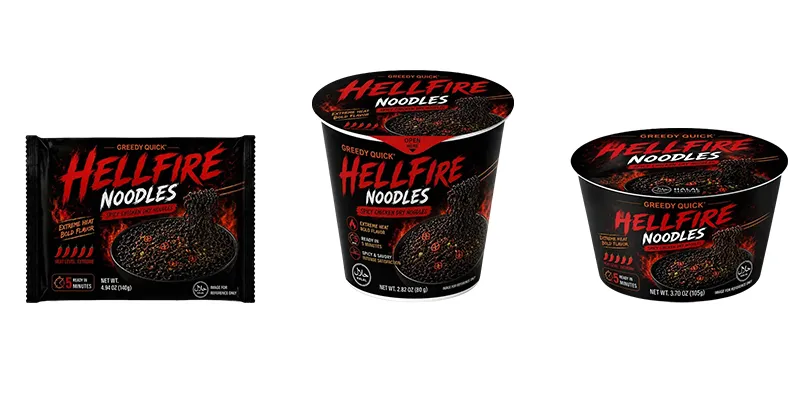
Quick Answer
- OEM (Original Equipment Manufacturing) means the factory produces noodles to your specification. You control the noodle type, flavor, packaging, and formulation. The product is unique to your brand.
- White label means you select an existing product from the factory’s catalog and put your branding on it. Other brands may sell the same product under different names.
- The choice between them affects your unit cost, development timeline, market differentiation, and ability to build lasting brand value. It is one of the most consequential decisions in launching a private label noodle brand — and it is frequently made without fully understanding the trade-offs.
Key Takeaways
| ✔ You control the product specification | → OEM |
| ✔ Fastest path to market | → White Label |
| ✔ Lowest upfront investment | → White Label |
| ✔ Your product is unique to your brand | → OEM |
| ✔ Best for testing a market | → White Label |
| ✔ Best for building long-term brand equity | → OEM |
What OEM Means in Instant Noodle Manufacturing
Under an OEM arrangement, you — the brand — define the product. The factory produces to your specification.
What you typically control under OEM:
- Noodle type and specification. Fried or air-dried. The thickness, texture, and flour blend. If you want a thinner noodle with a firmer bite than what’s standard, that becomes part of your specification. Browse our full noodle product range to see what’s possible.
- Flavor formulation. The seasoning blend is developed specifically for your brand — salt level, spice profile, sweetness balance, umami depth. It is not an off-the-shelf formula that other brands can access. Learn how the flavor development process works from brief to final approval.
- Packaging design. Bag, cup, or bowl. The shape, size, material, and graphic design are all yours. The packaging carries your brand identity entirely — from the outer film print to the sachet inside.
- Ingredient sourcing. Within the factory’s supply chain and certification scope, you can specify preferences — such as a particular oil type, natural flavorings, or the absence of specific additives.
What OEM requires from you: a clear product brief, time for sample development and revision, and a higher initial order quantity than white label — because the production line is set up specifically for your product rather than combined with other buyers’ runs.
See our OEM process page for how this works from inquiry to delivery.
What White Label Means in Instant Noodle Manufacturing
Under a white label arrangement, you select a product the factory already produces and apply your branding to it. The noodle type, flavor profile, and packaging format are pre-existing — other buyers may be selling the identical product under different brand names.
What you typically get with white label:
- A proven product — the formulation is already developed, tested, and in production. No R&D time. No sampling and revision cycles.
- A faster path to market — you can go from inquiry to shipment faster because there is no product development phase to work through.
- Lower barrier to entry — MOQs for white label products are generally lower because the factory can combine your order with other buyers’ runs of the same product.
What white label does not give you: product differentiation. If another brand sells the same noodle under their label, your only point of difference is your packaging design and brand story. In price-sensitive markets, this can quickly become a race to the bottom — the lowest-priced version of the same product wins the shelf.
Side-by-Side Comparison
| OEM | White Label | |
|---|---|---|
| Product uniqueness | Your product exists only under your brand — the formulation is developed for you | The same product may appear under multiple brand names in the same market |
| Development process | Longer — requires sampling, feedback, and revision cycles. Timeline varies by product complexity and number of revision rounds. | Minimal — the product already exists; only packaging design and branding are needed |
| Unit cost | Typically higher — your order runs alone, with dedicated line setup | Generally lower — production can be batched with other orders of the same product |
| Minimum order quantity | Generally higher — production line is configured for your product alone | Generally lower — the factory combines orders for the same SKU across multiple buyers |
| Brand control | Full — noodle type, flavor, packaging, ingredients within factory capabilities | Limited — you choose from existing options; the product spec is fixed |
| Competitive positioning | Your brand competes on product quality, flavor, and brand value | Your brand competes primarily on price, packaging, and distribution |
| Long-term value | Builds a defensible brand — customers who like your product cannot buy the same thing elsewhere | Limited defensibility — customers can switch to a cheaper version of the identical product |
| Best for | Brands committed to a market and building lasting brand equity | Market testing, short-term opportunities, price-driven segments |
See our full product range for the types of noodles available under both models.
When to Choose OEM
Choose OEM if:
- You are building a brand for the long term and need product differentiation as a core part of your competitive strategy
- Your target market has specific taste preferences that off-the-shelf products don’t match — a particular spice profile, a regional cuisine, a distinct texture preference
- You have a clear brand identity built around a specific product attribute — “air-dried, no palm oil,” “authentic buckwheat soba,” or a unique flavor that defines your brand
- You plan to build distribution over years, not months, and can invest the time and order volume that genuine product development requires
The trade-off: OEM requires more time and a higher initial commitment. But the product that results belongs to your brand — no competitor can sell the same thing at a lower price and undercut you.
When White Label Makes Sense
Choose white label if:
- You are testing a market and need to validate demand before committing to product development
- Your strategy is built on price competitiveness and distribution reach rather than unique product attributes
- You need product on the shelf quickly — for a seasonal opportunity, a retail tender, or a market window that won’t wait for OEM development
- Your initial order volume is below what OEM typically requires, and you plan to transition to OEM once the market is proven
The trade-off: White label gets you to market faster and cheaper. But it gives you no product moat — no competitive barrier. If your white label noodle sells well, a competitor can go to the same factory, order the same product, undercut your price, and be on the shelf next to you within months.
Can You Start White Label and Switch to OEM?
Yes — and this is a common path for brands that are serious about building something lasting.
Phase 1 — White label. Launch with an existing product to test the market. Prove that consumers in your target region will buy instant noodles under your brand. Learn which flavors sell, which channels work, and what price point the market accepts — without the investment of custom product development.
Phase 2 — Transition to OEM. Once the market is validated, develop your own product specification. Use the sales data from Phase 1 to inform your product decisions — which noodle type, which flavor direction, which packaging format. Transition your existing customers to the new OEM product, which is now unique to your brand.
The factory relationship established in Phase 1 makes Phase 2 significantly smoother. The production team already knows your brand, your packaging requirements, and your export documentation needs. You are not starting from zero — you are upgrading an existing partnership.
A real pattern we see regularly: a distributor enters a new regional market with a white label chicken-flavor bag noodle at a competitive price point. After 12–18 months of stable sales, they return to develop an OEM product — same noodle type, but with a custom lower-sodium formulation, a region-specific spice profile, and upgraded packaging. The second product carries higher margins, stronger retailer relationships, and a brand story the white label version could never support. The factory partnership and export logistics are already in place — the development work is incremental, not starting from scratch.
Industry Insight
With over 20 years in noodle manufacturing and export, we’ve seen both models work — and we’ve seen both fail. The difference is rarely the model itself. It’s whether the brand picked the right model for its stage, its market, and its ambitions.
In price-driven markets — much of Africa, parts of South Asia, and the Middle East — white label products dominate retail shelves. The winning formula in these markets is distribution reach and competitive pricing, not product uniqueness. Brands that try to launch premium OEM products into a market that rewards low price and wide availability often struggle — regardless of how good the product is.
In developed markets — Europe, North America, Australia — OEM is increasingly the standard for brands that survive beyond the first year. Retail buyers have many supplier options and favor products with a clear, defensible point of difference. A white label product that is visibly identical to three other brands on the same shelf rarely holds its position for long. Our BRC and HACCP certified facility supports both OEM and white label production to the standards these markets require.
The brands we’ve seen succeed share a consistent pattern: they start with clear product positioning, choose the model that fits that positioning, and — if they begin with white label — have a concrete plan for transitioning to OEM once the market is proven. The ones that stay on white label indefinitely are the ones most vulnerable to being replaced by a cheaper version of themselves.
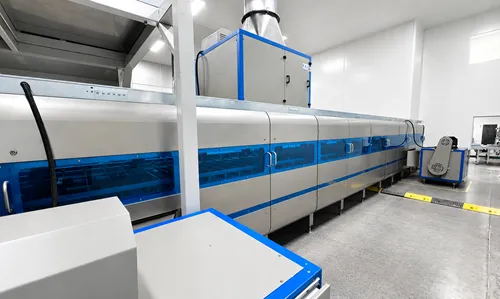
Frequently Asked Questions
Is OEM always more expensive than white label?
Unit cost is generally higher for OEM because your production runs are dedicated to your product alone, with no sharing of line setup across multiple buyers. However, the total business case is more nuanced. An OEM product that commands a higher retail price because it is genuinely differentiated can generate significantly better margins than a white label product that must compete on price alone. The relevant comparison is not unit cost versus unit cost — it is brand margin versus brand margin.
How do I know if a factory offers genuine OEM or only white label?
Ask directly: “Do you offer fully custom OEM production where we define the noodle specification, flavor formulation, and packaging design — or are we selecting from your existing product catalog?” A factory that offers genuine OEM will have an in-house R&D team, a defined sampling and revision process, and a clear development workflow. A factory that only offers white label will direct you to select from pre-existing products. At CF Noodles, our OEM service includes R&D support, sampling, and custom formulation — you don’t select from a catalog, we build to your brief.
Can I protect my OEM product from being sold to other buyers?
This is a standard part of OEM agreements. The product specification — noodle type, flavor formulation, and packaging design — is developed for your brand and documented in writing. Reputable OEM manufacturers operate under agreements that protect your formulation. Always confirm this protection in writing before beginning product development.
Can OEM noodles be halal certified?
Yes. If the factory holds halal certification — as our facility does — OEM products can be produced under halal compliance. This applies to the noodle base, the seasoning ingredients, and any oil or sauce components. The halal certification scope extends to custom formulations developed specifically for your brand. See our full certifications page for details on HACCP, BRC, FDA, and Halal credentials.
Can I use my own packaging design for OEM products?
Yes. OEM includes full packaging customization — bag, cup, or bowl format with your brand’s graphic design, logo, and product information. You can provide completed artwork, or the factory’s in-house design team can develop packaging based on your brand direction. Packaging design is typically finalized during the pre-production phase, alongside sample approval and specification confirmation.
What’s the difference in development process between OEM and white label?
White label requires no product development — the noodle and seasoning already exist. Only packaging design and branding need to be completed before production. OEM requires a development phase: your product brief, R&D formulation, sample preparation, your evaluation, feedback and revision, and final approval. The timeline varies by project complexity — a straightforward flavor adaptation takes less time than a fully custom formulation with multiple revision rounds. The key variable is how clear and specific your initial brief is.
Can I mix OEM and white label in my product range?
Yes. Some brands launch with a white label product as their entry-level SKU and an OEM product as their premium line. Others run white label for standard flavors where differentiation matters less and OEM for a signature flavor that defines the brand. The two models are not mutually exclusive — they serve different parts of a brand’s product strategy within the same factory relationship.
Which model is right for a first-time noodle brand?
It depends on your goals and resources. If you have a clear brand concept, a specific target market, and the capital to support product development and higher minimum orders — start with OEM. The product you build will be yours, and your brand equity begins accumulating from day one. If you are testing a market, working with limited capital, or need to validate demand quickly — start with white label, but have a plan for transitioning to OEM. The brands that stay on white label indefinitely are the ones most likely to be displaced by competitors selling the identical product at a lower price.

Not Sure Which Model Is Right for Your Brand?
Tell us your target market, preferred noodle type, estimated order quantity, and launch timeline. Our export team will recommend the most suitable production model and provide a tailored quotation within 24 hours.
The OEM and white label models described reflect standard food manufacturing industry practice. Specific terms, timelines, minimum order quantities, and agreement structures vary by manufacturer and project scope, and should be confirmed in writing before beginning any product development or production arrangement.