
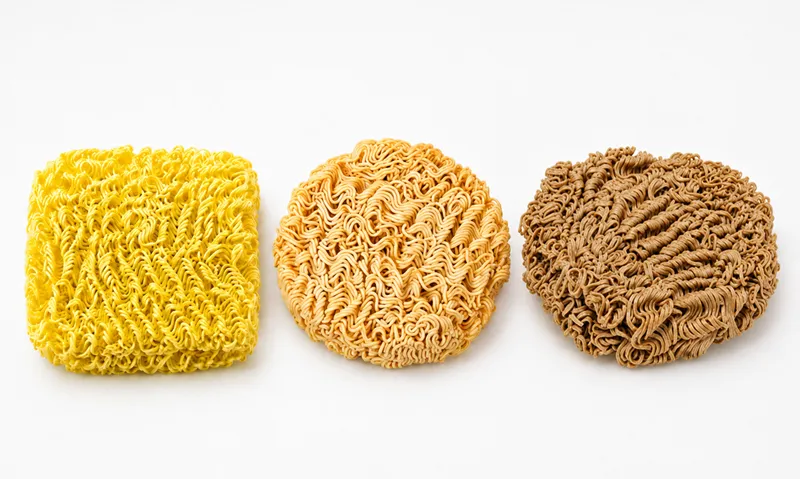
Quick Answer
- Fried noodles — best for cost-sensitive, high-volume markets. Most economical to produce, generally the longest shelf life, and the global standard for mass-market instant noodles.
- Air-dried noodles — best for premium and clean-label positioning in Europe, North America, and Australia. No deep frying; shorter ingredient lists.
- Specialty noodles — for brands built around a specific noodle identity: buckwheat soba, whole wheat noodles, or other distinct formulations that serve particular market segments.
- New brand strategy — most private label brands start with fried noodles, then add air-dried or specialty lines after building distribution and retail relationships.
Key Takeaways
| ✔ Most economical to produce | → Fried |
| ✔ Premium / clean-label positioning | → Air-Dried |
| ✔ Buckwheat or whole wheat formulation | → Specialty |
| ✔ Generally longest shelf life | → Fried |
| ✔ Best for clean-label and better-for-you branding | → Air-Dried |
| ✔ Highest retail price potential | → Specialty |
Full Comparison Table
| Fried Noodles | Air-Dried Noodles | Specialty Noodles | |
|---|---|---|---|
| Production method | Steamed, then deep-fried in palm oil | Steamed, then dried with hot air — no frying | Varies by type — buckwheat, whole wheat, or soba-style processing |
| Unit cost | Generally the most economical | Typically higher than fried | Generally the highest |
| Shelf life | Generally longer — frying removes moisture efficiently. Actual shelf life depends on formulation, packaging, and storage conditions. | Depends on packaging and moisture barrier. May be shorter than fried in comparable packaging. | Varies by noodle type and formulation. Depends on packaging and storage conditions. |
| Oil content | Contains oil from the frying process | Minimal — no oil added during drying | Varies by noodle type and process |
| Rehydration | Generally rehydrates quickly in hot water | May require slightly longer soaking or cooking, depending on formulation | Varies by noodle type and thickness |
| Texture | Soft and springy | Firmer and chewier | Varies — buckwheat noodles are firm with a nutty bite; whole wheat noodles are hearty and chewy |
| Flavor profile | Mild oil note; carries seasoning well | Clean taste; seasoning stands out | Grain character comes through — buckwheat has a distinctive nutty, earthy flavor |
| Customization | Flavor, shape, packaging | Flavor, shape, packaging | Noodle type, flavor, shape, packaging |
| Positioning | Value to mainstream | Mainstream to premium | Premium to specialty |
| Typical packaging | Bag, cup, bowl | Bag, cup, bowl | Bag, premium cup, gift box |
| Common retail channels | Supermarkets, convenience stores, discount retailers, foodservice, institutional | Premium supermarkets, health food stores, organic retailers, online brands | Asian grocery, specialty stores, organic shops, restaurants |
| Suitable private label | Mass-market brands, distributor brands, foodservice supply | Premium brands, clean-label brands, better-for-you positioning | Niche brands, grain-specific brands, regional cuisine brands |
Browse our complete product range for each noodle type.
Manufacturing Process
All three noodle types share the same early production stages. The key difference is what happens after steaming:
Raw Flour → Mixing → Sheeting → Steaming
At this point, the process splits:
| Fried | Air-Dried | Specialty |
|---|---|---|
| Deep-fried in palm oil | Hot air drying chamber | Type-specific processing |
| Rapid moisture removal | Gradual moisture removal | May include steaming, pressing, or alternative drying methods |
| Adds oil from frying | Oil-free final product | Depends on noodle type and process |
All types then proceed to: Seasoning → Packaging → Quality Inspection → Container Loading → Shipping
Although the final production process differs for each noodle type, the early manufacturing stages—such as dough mixing, sheeting, and steaming—are similar. In our factory, dedicated production lines are used to manufacture different noodle types according to their specific processing requirements.
When to Choose Fried Noodles
Choose fried noodles if:
- Your target market is price-sensitive — Africa, South Asia, Middle East mass retail, parts of Latin America
- You need extended shelf life for long distribution chains and varied storage conditions
- You’re competing against established mass-market brands where fried noodles are the consumer expectation
- You want to launch with multiple flavors — fried noodles absorb seasoning well across savory, spicy, and mild profiles
Typical applications:
- Cup noodles and bag noodles for retail
- Foodservice and institutional supply
- Discount retailers, convenience stores, supermarkets
- Military and emergency food supply
Things to consider:
- Fried noodles contain oil from the production process — this limits clean-label or “no palm oil” claims
- Some markets, particularly in the EU and Australia, increasingly regulate palm oil disclosure on labels
- Packaging format affects shelf life — cups and bowls with foil lids generally provide better moisture and oxygen protection than bags
When to Choose Air-Dried Noodles
Choose air-dried noodles if:
- Your market is Europe, North America, or Australia — demand for clean-label and better-for-you products is strongest here
- Your brand positioning is premium or built around shorter, cleaner ingredient lists
- Your target retailer requires products with no added oil from the manufacturing process
- Your consumer actively reads labels and seeks products made without deep frying
Typical applications:
- Premium supermarkets and better-for-you product lines
- Organic and natural food chains
- Direct-to-consumer online brands
- Specialty food distributors
Things to consider:
- Higher unit cost than fried — your retail positioning must support it
- Air-dried noodles generally benefit from higher-barrier packaging to maintain quality throughout the shelf life
- The production story only adds value in markets where consumers and buyers understand the difference between fried and air-dried manufacturing
→ View air-dried noodle options
When to Choose Specialty Noodles
Choose specialty noodles if:
- You’re targeting a specific segment: buckwheat soba for Japanese and Korean markets, whole wheat noodles for premium European lines
- Your brand identity is built around a specific noodle type — “100% Buckwheat Soba” positions differently from a standard mixed-flour noodle
- You sell into Asian grocery or specialty channels where consumers specifically seek out soba, buckwheat, or regional noodle types
- You have a premium price point and accept lower volume as part of a niche strategy
Typical applications:
- Japanese and Korean restaurants and grocery
- Asian specialty importers
- Organic and specialty food retailers
- Premium export markets
Things to consider:
- Generally the highest unit cost of the three types
- Not every factory handles buckwheat or whole wheat noodle production — confirm manufacturing capabilities before engaging
- Buckwheat and whole wheat noodles may require longer production planning, separate raw material sourcing, and dedicated line scheduling
- If your product makes a specific claim — such as a particular grain percentage — confirm that the factory can document and maintain that specification across production runs
→ View specialty noodle options
Industry Insight
Distributors entering African and Middle Eastern markets generally prioritize competitive pricing and reliable shelf life — making fried noodles the most common first choice. These markets reward availability and consistency over premium positioning.
Brands supplying Germany, the UK, Scandinavia, Canada, and Australia increasingly request air-dried noodles. The driver is retail buyer requirements: many European supermarket chains now expect clean-label or palm-oil-free product lines, and air-dried manufacturing is the most straightforward way to meet that specification.
Buckwheat soba and whole wheat noodles have seen steady demand from Asian grocery distributors and restaurants in North America and Europe. These are smaller-volume but higher-margin opportunities for brands that can commit to a specific noodle identity and are comfortable with longer production planning cycles.
Across all markets, the most successful private label launches we’ve supported followed a simple pattern: start with fried to establish cash flow and retail relationships, then add air-dried or specialty as a second-phase premium line 12–18 months later. The factory relationship is already in place — expanding the product line is far more efficient than starting from zero with a new supplier.
How to Choose the Right Noodle Type in 5 Steps
Step 1: Define your target market. Country determines consumer expectations, certification requirements, retail structure, and which noodle types are familiar to buyers. Don’t choose a noodle type until you’ve chosen a market — what sells in Germany may not sell in Nigeria, and vice versa.
Step 2: Define your product positioning. Determine whether your product is intended for value-oriented, mainstream, or premium retail channels. Your positioning should align with your target customers’ expectations and purchasing power. A product built for discount retail requires different specifications than one built for a premium supermarket chain.
Step 3: Identify your target sales channels. Supermarkets and convenience stores typically carry fried or air-dried noodles. Better-for-you and organic retailers lean toward air-dried. Asian grocery and specialty importers often look for buckwheat soba or whole wheat noodles. Foodservice and institutional buyers generally prefer fried. Your channel shapes your product requirements.
Step 4: Compare total costs across noodle types. Request quotes for all relevant noodle types from the same factory. Compare not only unit cost but total landed cost — packaging, shipping, and duties all factor in. Confirm minimum order quantities — they often differ by noodle type.
Step 5: Validate with samples. Order samples of your top two choices. Evaluate them side by side. Share them with potential buyers or distributors and ask which they would stock. The market gives you the answer — not the spreadsheet.
Expert Tip
If you’re entering a new market for the first time, don’t choose your noodle type only on manufacturing cost. Consider retail positioning, competitor offerings, consumer expectations, and distribution channels as a complete picture. A somewhat higher production cost can support significantly higher retail margins — provided your target market values what that additional cost delivers.
We’ve seen brands launch with the most economical option, secure shelf space, then find it difficult to move into premium channels later because their brand is already positioned at the value end. It is generally easier to start at a higher tier and offer promotional pricing than to start at entry level and raise the brand’s perceived value.
Frequently Asked Questions
Are air-dried noodles a better-for-you alternative to fried noodles?
Air-dried noodles contain minimal oil from the manufacturing process, since they are dried with hot air rather than deep-fried. They typically have shorter, cleaner ingredient lists. Whether a brand can market them with specific better-for-you or clean-label claims depends on the target market’s regulations and the final product formulation. In the EU and Australia, air-dried products are commonly positioned in the premium and better-for-you category. In the US, any specific claims must comply with FDA labeling requirements.
Which noodle type generally has the longest shelf life?
Fried noodles generally offer extended shelf life because the frying process removes moisture efficiently. However, actual shelf life depends heavily on formulation, packaging materials — especially oxygen and moisture barrier properties — and storage conditions throughout the distribution chain. A well-packaged air-dried noodle can match or exceed a poorly packaged fried noodle. Always confirm shelf life testing data with your manufacturer for your specific product and packaging.
Can all three noodle types be customized?
Yes. All three support custom flavors, shapes, and packaging. The extent of customization depends on the factory’s equipment and formulation capabilities, not the noodle type itself. Our OEM process handles customization across fried, air-dried, and specialty noodles on separate production lines.
Which noodle type is best for a first-time private label brand?
It depends on your market and positioning. Many first-time private label brands begin with fried noodles — generally the most economical, with the widest market acceptance and the fastest path to initial revenue. Brands targeting premium European or North American channels often launch with air-dried. Brands built around a specific noodle identity — buckwheat soba, for example — may go directly to specialty if their market demands it from the start.
What types of specialty noodles are available?
Specialty noodle options depend on the manufacturer’s capabilities and product range. Common types include buckwheat noodles (soba-style), whole wheat noodles, and other grain-based formulations. Always confirm the exact formulation, ingredient declaration, and any applicable claims — such as grain percentage — with the manufacturer before commercial production. Specifications should be documented in writing.
Can one factory produce all three noodle types?
Many mid-sized and larger factories can produce fried and air-dried noodles on separate production lines. Buckwheat and whole wheat noodles may require additional equipment, dedicated lines, or separate production scheduling. Always ask the factory which types they can produce on which lines, and whether there are any cross-contact considerations for your specific product formulation.
→ Ask us about production line compatibility for your product
Still Unsure Which Noodle Type Fits Your Market?
Tell us your target country, preferred packaging format, and estimated order quantity. Our product specialists will recommend the most suitable noodle solution and prepare matching samples for your evaluation.
Specifications such as shelf life, rehydration time, texture, oil content, and nutritional values vary depending on formulation, packaging materials, storage conditions, and local regulatory requirements. Always confirm final product specifications with your OEM manufacturer before commercial production.